

501.5K
Downloads
1007
Episodes
Running injury tips on self-diagnosis and self-treatment. Simple strategies for rapid recovery of running injuries.
Episodes

Monday Feb 01, 2021
Monday Feb 01, 2021
I am sure that you have heard your running buddies use an analogy:
"We just banked another long run.”
“We got another hard workout in the bank.”
All these efforts and investments in our training add up. They create this great store of energy for us. The accumulation of fitness is what prepares us for a marathon an Ironman, or an ultramarathon.
Today on the Doc On The Run Podcast we're talking about how running injuries are a lot like a savings account.

Friday Jan 29, 2021
Friday Jan 29, 2021
Snowboarder’s fracture is a small fracture in your foot that is often misdiagnosed as an ankle sprain.
The injury occurs when you break a portion of the talus bone called the lateral process.
The lateral process of the talus sits at the outside of your foot and ankle.
You can break it when you roll your ankle running on a trail or stepping in a pothole while running on the road.
These fractures are much more common that previously taught. Not surprisingly, if you think you have an ankle sprain, but you really have a lateral process fracture, it won’t get better.
Today on the Doc On The Run Podcast we're talking about what a snowboarders fracture really is, and why runners need to know about them.

Wednesday Jan 27, 2021
Wednesday Jan 27, 2021
Many times doctors look at you cross-eyed when you tell them how much you run, how far you run and how much you want to run now. They tell you that you ran “too much” and got injured. The snap recommendation is to stop running.
Doctors want you to heal your running injury. Many times doctors recommend the “safest” path…stop running. Be patient. Wait for healing.
Slower treatment is not always better, and isn’t even always safer.
The goal for most injured runners is not to just heal the injury.
The goal for most recovering runners is to get back running.
The critical piece is to not lose sight of what “not running” does to your longevity as a runner. Time is of the essence.
Today on the Doc On The Run Podcast we're talking about how the safest path to healing is the slowest.
Monday Jan 25, 2021
Monday Jan 25, 2021
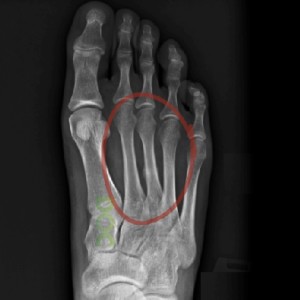
A runner with a stress fracture called me for a telemedicine visit because she was confused.
The doctor told her that she has a stress fracture. But there was no crack on the x-ray.
The doctor said she only had a “periosteal reaction” which suggested she had a metatarsal stress fracture.
She wanted to know if a periosteal reaction meant the foot was really broken, or not.
The periosteal reaction is one of the earliest findings that you can see on your x-ray when you have a stress fracture in one of the metatarsal bones in your foot, before you even see a crack.
Today on the Doc On The Run Podcast we're talking about periosteal reaction in a runner with a stress fracture.

Friday Jan 22, 2021
Friday Jan 22, 2021
If you're not actually healing as fast as you want to it is just not a priority.
I talked to a runner the other day who said that he was trying to lose some weight, but he already felt like he was off track, yet it's only a couple weeks into the new year.
The fact is that if you can't get to run and exercise, if you can't take the time to prepare meals and eat food that is healthy, it's just not a priority for you. That's not a judgment, it's just a fact.
If we are not really taking the time to pay attention to how we sleep, how we eat, how much stress we have applied to the injured tissue, if we are not doing all of those things, it’s because it's not a priority.
Today on the Doc On The Run podcast we're talking about how if you're not healing fast is just not a priority.

Wednesday Jan 20, 2021
Wednesday Jan 20, 2021
The sesamoid bones, these two little bones and they sit under the big toe joint and interestingly when I show X-rays to someone like somebody who has a stress fracture almost always the first thing they say is “what are those two things” and they're pointing to the sesamoid bones.
They are also very small and they don't have a great blood supply. So if you get a problem with the sesamoids and you get sesamoiditis, it gets flared up and gets worse and worse and worse.
A lot of times it'll turn into a sesamoid stress fracture which is very serious because it can actually crack and break.
Today on the Doc On The Run podcast we’re talking about why sesamoiditis is so serious in a runner.

Monday Jan 18, 2021
Monday Jan 18, 2021
The only thing worse than a running injury is a re-injury.
Most of the runners who call me for a telemedicine visit are demoralized.
You get inured. A doctor tells you to stop running so you can heal. You wait. You heal. You go for a run. And you get injured again.
The cycle of running injury and re-inury is a result of being de-conditioned during the “healing” period.
Going for your first run in that untrained state is risky and completely unnecessary.
Today on the Doc On The Run Podcast we're talking about why the first days of running on a healed injury are so risky.

Friday Jan 15, 2021
Friday Jan 15, 2021
I recently got a great question from a runner...
Why are flat feet less stable when you run?
Pronation of the foot happens as your arch collapses and the foot elongates. You do that every time you land as you run. You need pronation to absorb impact and decrease forces.
Supination is the opposite of pronation. Supination transforms your foot from a flexible, force-absorbing adapter to a rigid lever to propel you forward as you run and push off.
Today on the Doc On The Run Podcast, we’re talking about why flat feet are less stable.

Wednesday Jan 13, 2021
Wednesday Jan 13, 2021
One of my best friends has pain and swelling in his Achilles tendon, right in the watershed region that we know develops Achilles tendinosis and can even rupture.
He was understandably worried. He asked me, “Does my Achilles tendon need a PRP injection or Stem Cell injection?”
I explained to him that he was asking the wrong question.
I said, the right question is, “Do I need an injection at all.”
Next I gave him access to the Achilles Tendon Course where he could go through the 5 step process I teach in the Achilles Tendon Course for Runners so he could figure out how serious your Achilles tendon really may be.
Problem solved…no stem cell injection no PRP injection. No stem cell injection. No fracture walking boot. No cast. No surgery. Today he is running.
Today on the Doc On The Run Podcast, we’re talking about whether or not a PRP injection vs. a stem cell injection would be better in an Achilles tendon injury.

Monday Jan 11, 2021